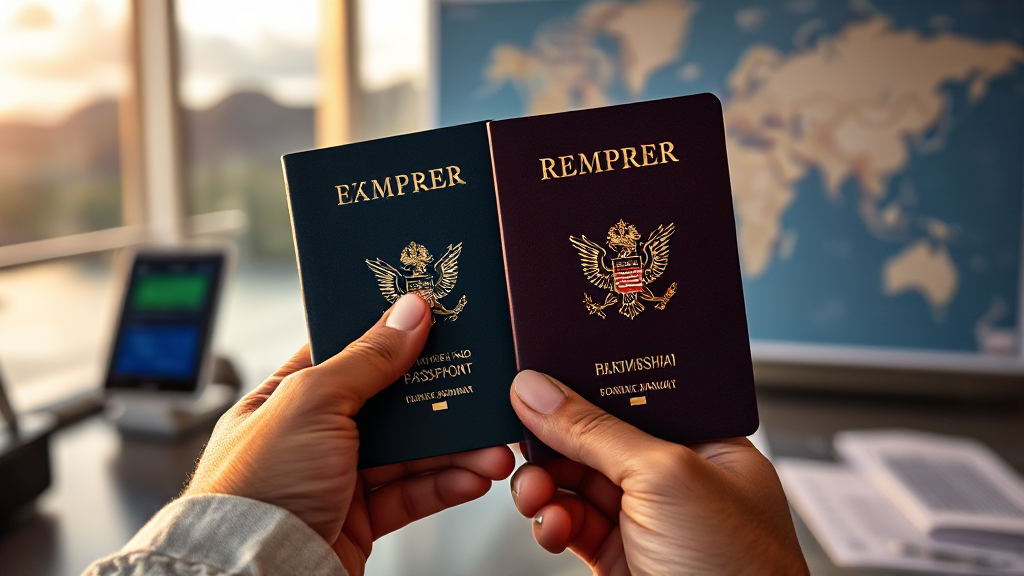
What the Vanuatu Citizenship Form Unlocks for Travellers
Standing at a check-in desk in Doha, watching an agent flick through your passport, you stop thinking about paperwork and start thinking about outcomes. Will this document get me through the gate, or will it send me to a side counter for a visa I did not plan for? That is the honest question behind every citizenship application, and it is the question worth asking about Vanuatu. The forms matter, but only because of what they unlock once the plane lands.
For travellers who already hold a strong passport, a second one is rarely about escape. It is about optionality: a backup route when a visa queue is long, a way to spend more than ninety days somewhere without leaving, a document that behaves differently at a border than the one in your other pocket. Understanding Vanuatu Dual Citizenship starts with that traveller’s mindset rather than a legal one. The rules exist to serve the mobility, not the other way around.
The Application Form and the Freedom It Represents
The Vanuatu citizenship process runs through a formal application, usually handled under the country’s development support programme. On paper it looks like any other government form: personal details, passport copies, police clearance, proof of funds, medical certificate, and a declaration of the investment contribution. What it actually represents is a decision about how you want to move through the world for the next decade.
Most applicants do not need to renounce their existing nationality to complete it. Vanuatu permits dual citizenship, which means the passport you already carry stays valid. That single detail changes the calculus for US citizens, Canadians, Europeans and Australians who assume a second nationality means giving up the first. It does not. You simply add a document to the drawer.
The practical travel benefit arrives quickly. Once citizenship is granted, you can apply for a Vanuatu passport, and that passport opens visa-free or visa-on-arrival entry to a long list of countries across Asia, the Caribbean, the Pacific and parts of Africa. For a frequent traveller, the value is not one dramatic destination. It is the accumulation of small conveniences: skipping a visa application for a weekend trip, entering a country on arrival rather than waiting weeks for approval, and having a second option when a primary passport creates friction.
Paperwork, in other words, is the price of a smoother border experience. The form is not the point. The point is the queue you no longer stand in.
What Each Requirement Actually Buys You at a Border
It helps to read the requirement list as a traveller rather than an applicant. Each item exists for a reason, and each one maps to something you will eventually feel at immigration.
Proof of funds and the contribution. This is the entry ticket. It confirms you can support the programme’s development goals, and in return you receive citizenship rather than a residence permit. The difference matters at a border: a citizen enters as a citizen, not as someone hoping a visa officer is in a good mood.
Police clearance and medical certificate. These are character and health checks. They keep the programme credible, which in turn keeps the passport respected by the countries that grant visa-free access. A passport is only as useful as the goodwill it carries, and that goodwill is maintained by screening applicants properly.
Oath or declaration of allegiance. A formality for most, but a meaningful one. It formalises the legal relationship, which is what allows the passport to be issued in your name at all.
Processing and due diligence. This is the waiting period, and it is the part travellers underestimate. It is also the part that protects the value of what you are buying. A passport issued without checks would be worth less at a border, not more.
None of these steps are glamorous. All of them feed directly into the moment an officer looks at your document and waves you through. That is the trade: a few months of administration for years of easier movement.
Tax, Residency and the Traveller’s Real Question
Here is where most people confuse two very different things. Holding a Vanuatu passport does not automatically change your tax residency, and it does not erase obligations in your home country. Vanuatu itself does not levy personal income tax, which is one reason the citizenship attracts attention, but the country you actually live and work in still has its own rules.
For a traveller, the useful framing is this: citizenship is about movement, tax residency is about where you spend your days and where your economic ties sit. If you are considering a second passport primarily to simplify your tax position, you need proper advice about residency, treaty rules and reporting requirements in your home country. The passport alone does not do that work.
What the passport does do is remove some of the friction around where you can go. It gives you a lawful right to enter and remain in Vanuatu, and it gives you visa-free or simplified access to a range of other jurisdictions. If your lifestyle involves regular international travel, that access has genuine value independent of any tax planning.
The honest position is that dual citizenship is a mobility tool first and a financial tool second. Treat it that way and you will make a clearer decision.
Where Visa-Free Access Ends and Planning Begins
Visa-free travel is a real benefit, but it is not unlimited, and any honest traveller knows the difference. A Vanuatu passport grants access to a substantial list of countries without a pre-arranged visa, but it does not grant access everywhere. Major destinations such as the United States, Canada, the United Kingdom and the Schengen area still require a visa for Vanuatu passport holders in most cases.
That limitation matters, and it should shape how you think about the document. If your travel is concentrated in Asia, the Pacific, the Caribbean or parts of Africa, the access is genuinely useful. If your life revolves around regular trips to North America or Europe, the passport is a supplement rather than a replacement for whatever you already hold.
This is why dual citizenship is best understood as a second key, not a master key. It opens doors your first passport may not, and it sits alongside your existing nationality rather than replacing it. For many travellers, that combination is exactly the point: two documents, two sets of access rules, and more choices at the check-in desk.
The form you fill in today is not really about the form. It is about the borders you will cross in the years after it is approved, and the freedom to decide your route without waiting on someone else’s approval. That is what a second citizenship is for.